Showing posts with label discussion. Show all posts

27 October 2009

Experimental Gastronomy

If you had told me the phrase experimental gastronomy about a year ago I would have looked at you with bewilderment and confusion. If you had told me the phrase experimental gastronomy about six months ago, I would have looked at you with disdain and (probably) haughty-ness. Needless to say, the subject of experimental gastronomy is a recent and please-tread-lightly subject both in and out of the food world.

In the strictest sense, experimental gastronomy simply means being different/experimenting with food. These can range from being as docile as throwing some chilies into a chocolate ganache to as extreme as distilling the essence of pineapples into a liquid and then injecting them into vines to make grapes that taste tropical. As can be imagined, some of these experiments are more successful than others but all, at least on some level are interesting.

While most references to experimental gastronomy refer only to the act of cooking itself, I have recently stumbled across some pretty exciting 'experimental' designs in both restaurants service and design, which I felt could be justifiably included with little explanation. However, in order to not make this post ridiculously long, I have split up each section into its own post, which can be accessed by the links provided.

Enjoy:
  • Molecular Gastronomy
  • Experimental Service
  • Experimental Design

  • 26 October 2009

    Experimental Gastronomy (in Food)

    Molecular gastronomy is a type of cooking which is all about reinventing food through science. One of my first introductions into pure 'molecular gastronomy' was through a Daring Cooks challenge in which the participants had to create powdered forms of foods like apple, tomato, carrot, and lemon. My reaction to the form of food was a bipolarity of emotions in which I was fascinated by and dismissed the concept as pretentious bullshit. Since then, I have discovered many new forms of molecular gastronomy, many of which are interesting and innovative, but the overarching haze of elitism has never moved that far away.

    Probably what I found the most exciting example of molecular gastronomy was a post on parfaits by the webzine Luxirare. The zines creator Ji, said that she was interested taking the simple concept of the yougurt parfait and making it more provocative. I really like this post and this blog in general because it is very well enticingly laid out and the photography is incredible.


    Experimental Service (in Restaurants)

    Experimental Service might bring to mind the image of a small robot whizzing around with an insurmountable number of plates or the waitstaff abuse you and you pay for it (see Dick's Last Resort), depending on the size and breadth of your imagination. However, both of these are quite far from the restaurant I have in mind.

    The establishment is a tiny gem hidden away in the back streets of Tokyo called Aronia de Takazawa. It contains only two tables and has no michelin stars, but don't let that fool for a second into thinking it is anything less than on of the most magnificent culinary experiences you would ever have.


    The restaurant, managed by Akiko Takazawa with food prepared by Yoshiaki Takazawa, is the picture of the Japanese minimalist aesthetic. The whole restaurant, which could see around twenty people is instead limited to under ten. The reason for this is that the food 'experience' is modeled after the tea ceremony, in which form, presentation, and procedure are sacrosanct and the host plays a critical role. A meal at the Aronia de Takazawa features between ten and eleven courses, all hand crafted my Takazawa and can be as simple as plate of vegetables grown by the chef's uncle and grandfather or a complex as a vegetable terrine made out of tiny cubes of vegetable, each marinated in its own unique sauce and assembled into a rectangle the size of a zippo light and takes Takazawa an entire day to make.
    (If you are interested in a review of an entire meal, check out this article where I got most of my information)


    This kind of service does not come cheap though, and will cost upwards of $260 per person in addition to a reservation a few weeks in advance and don't expect to get a table all for your lonesome. However, you can try to simulate the experience for much cheaper via this video found on the restaurant's website. Also, look on the bright side this is much easier than getting a table on similarly priced Michelin restaurants such as The French Laundry, which you have to reserve more than a year in advance)
    Experimental Design (in Restaurants)

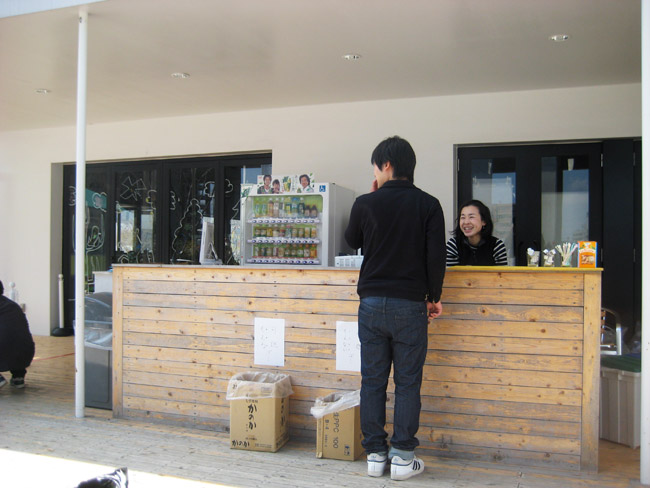
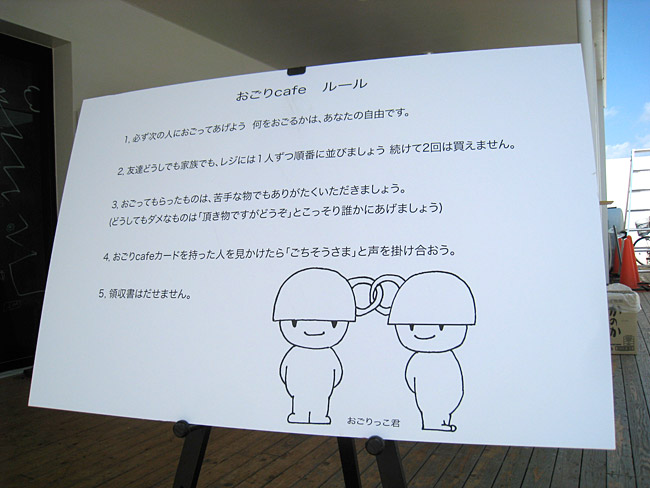
    Experimental Design in a restaurant does not mean anything that you are thinking about. Seriously. In the Ogori (おごり) Cafe, the name of the restaurant, when you arrive you immediately order something upon arrival. This is where the 'experimental' bit comes in; you rarely get what you order. Instead you get what the person before you ordered. And the person after you gets what you ordered. And so on and so forth.


    Personally, I think that this concept for a restaurant's design is one of the most innovative things I have ever heard about. The reason why is surmised in something Cabel Sasser (whose blog I found this wonder on) wrote about his experience there: "It forced one to "let go", just for a brief moment, of the total control we're so used to exerting through commerce. It led you to taste something new, that you might not normally have ordered. It was a delight."

    Unfortunately I don't think this will ever work anywhere I live (too many people worried about weight or allergies or being picky eaters but until then I get to Japan and visit the Ogori Cafe for myself, I will be content wanting water, making a sandwich, and replying ありがとございます (thank you) to no one in particular.